Table Of Content

The average time detected from the onset of the first symptoms to TE was 68.43 days. Overall, there were no significant associations between TE and COVID-19-related features (length of hospitalization, virologic positivity, or duration of fever), treatment characteristics, or laboratory findings. The authors concluded that post-infection acute TE occurs in a significant number of COVID-19 patients and the burden of this condition may impair the quality of life, with a significant impact on individuals. Baldness is often hereditary, and is activated by a shift in your hormones. If you’re experiencing elevated levels of the hormone dihydrotestosterone (DHT), your body will respond by shrinking your hair follicles and reducing the length of the hair growth cycle, according to Cleveland Clinic. Telogen effluvium involves rapid shedding of hair over a short period.
Traction alopecia
Nutritional support to ensure adequate iron stores, vitamin levels, balanced protein, fat, and carbohydrate intake, and hydration are easy means to keep the body resilient. More and more, we are seeing a rise in mental load from a variety of sources—work, relationships, and finances—which behooves us to incorporate mindfulness and stress management into our daily lives. The benefits of daily exercise and adequate sleep cannot be overstated, as both are crucial in cellular repair processes. It works by prolonging the anagen, or the active growth phase of the hair follicle.
Medications or medical treatment
Activated ARs promote the transcription of transmembrane protease serine 2 (TMPRSS2) gene 21q22.3, as graphically reported in Figure 1. TMPRSS2 is the spike protein for SARS-CoV-2 [66], and its transcription promoted by ARs strongly activated in AGA could favor the entrance of SARS-CoV-2, leading to the worsening of hair loss until the TE. Stopping hair loss indefinitely depends upon the underlying cause. As a general rule, the sooner you treat hair loss, the more likely you will be able to reverse or reduce the rate of hair loss.
Deterrence and Patient Education
If you think you may be experiencing hair loss, you should speak to your GP. They will be able to diagnose you and give guidance on how to manage the condition. GP Doctor Bhavini Shah, from LloydsPharmacy Online Doctor, revealed eight possible causes of thinning hair in women.
It is worth noting that this method is unlikely to benefit or help people with scarring alopecias. Sign up for free and stay up to date on research advancements, health tips, current health topics, and expertise on managing health. “Hair is important to us cosmetically, but our body — when we have a fever or are significantly ill — doesn’t care about the hair,” he said. Theresa Cabrera was so ill with COVID-19 that she had to spend a month in the hospital this spring, much of that time sedated, intubated and on a ventilator.
Management and Treatment
“Without medications or treatment, hair loss due to androgenetic alopecia is permanent and progressive,” explains Dr. Bailiff. Many medications have been linked to telogen effluvium, but the most common are beta-blockers, retinoids (including excess vitamin A), anticoagulants, propylthiouracil, carbamazepine, and immunizations. The effects of these drugs are very quick, and your hair will begin to fall out while it is still in the growth, or anagen, phase.
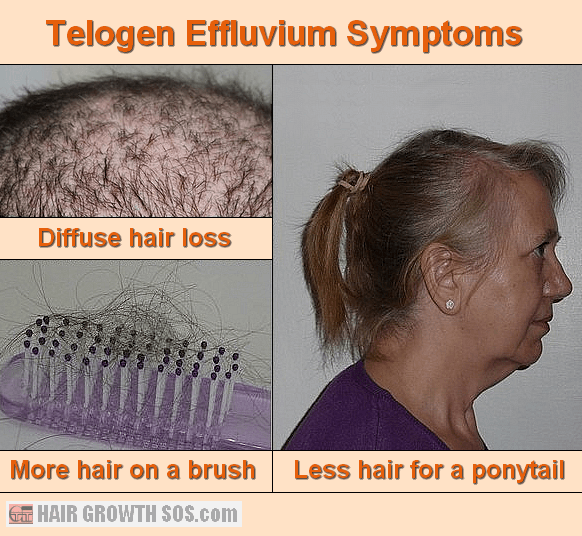
Telogen effluvium is excessive shedding of resting or telogen hair after some metabolic stress, hormonal changes, or medication. Telogen hair is also known as club hair due to the shape of the root. In a normal healthy person's scalp, about 85% are anagen hair and 15% are telogen hair.
How can chronic TE be distinguished from AGA?
Telogen effluvium happens in the telogen, or resting, phase of the hair growth cycle; anagen effluvium happens in the anagen phase, when your hair is growing. Anagen effluvium causes a lot of hair loss very quickly, while telogen effluvium is usually a more gradual thinning. While telogen effluvium is typically a self-limited and self-reversing phenomenon lasting less than 6 months (acute TE), some patients will experience a continuation of this “hyper-recycling” for a much longer time. Additionally, emotional distress incurred during the acute phase of TE can sometimes become its own stressor, feeding the process forward. Normally, hair follicles go through a cycle that includes a growth phase (anagen), a transitional phase (catagen), and a resting phase (telogen) before a new hair begins to grow in the same follicle.
All the hairs on the scalp are at different stages in their life cycle. At any one time about 1 in 100 scalp hairs are at the end of their life ready to fall out. This is why you will commonly find a few hairs on your shoulders and some hairs fall out each time you wash your hair.
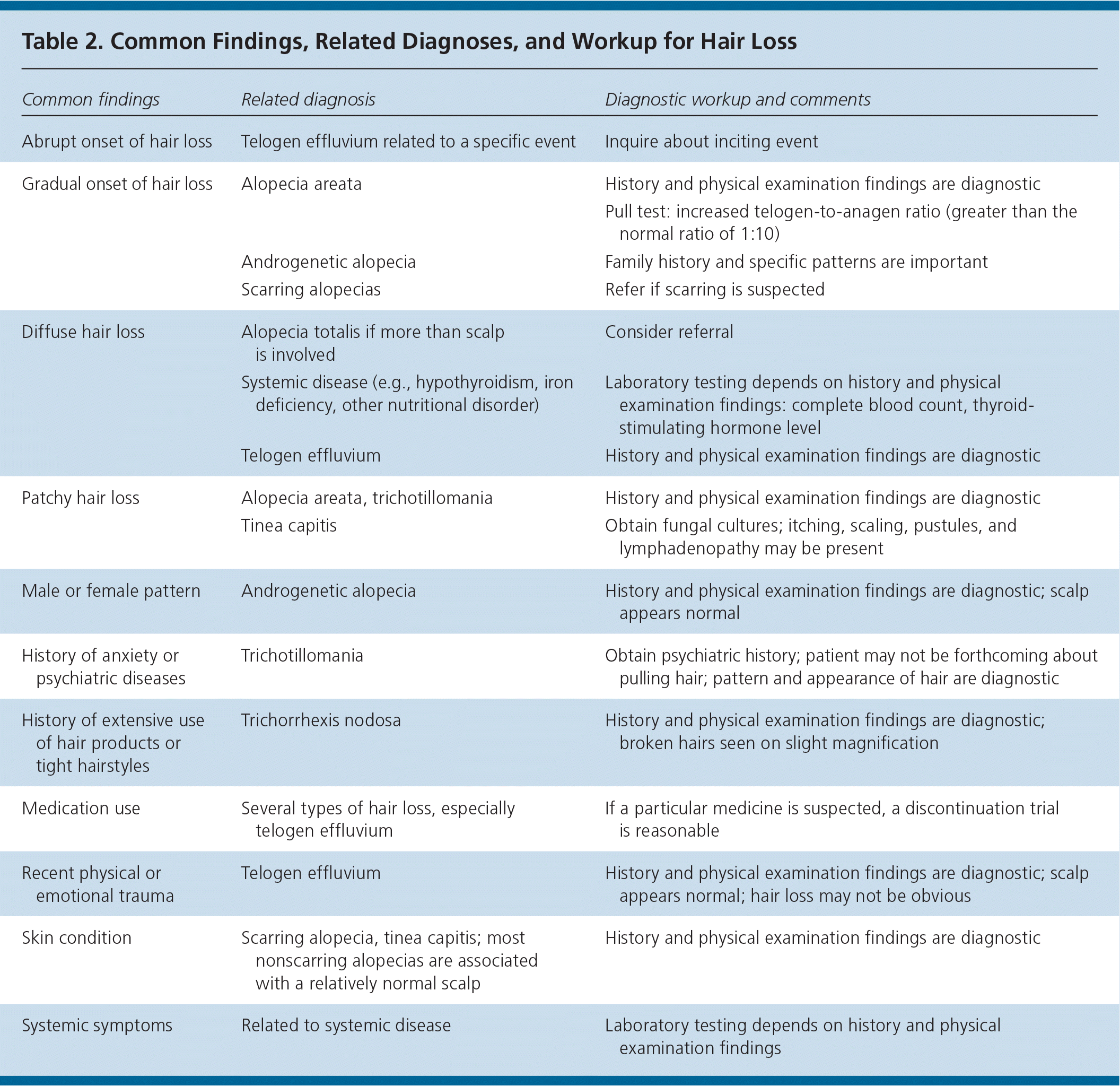
Causative conditions such as scalp conditions (e.g., psoriasis, seborrheic dermatitis) should be treated [24]. The patient’s drug history should be obtained in detail, and drugs suspected to cause the condition should be replaced or discontinued [5]. The longer the duration of shedding, the more probable the involvement of multiple and repetitive triggers such as nutritional deficiencies, thyroid disease, systemic illnesses, or infections. This makes the search for triggers more difficult and may require frequent visits [24]. Numerous drugs can cause telogen hair loss and it usually starts after 12 weeks of dosage [2,4]. Changes in the dosage of drugs can also lead to excessive shedding [11].
It usually won’t affect your hairline or cause total baldness, but severe cases of telogen effluvium may affect other areas of your body, including your eyebrows and body hair. Occasionally, the hair-thinning can mimic male- or female-pattern hair loss. On the one hand, the vascular system plays a vital role in maintaining the HFSC microenvironment; on the other hand, stimulating angiogenesis helps to increase the blood supply of DPCs and to promote hair growth. Doctors say telogen effluvium is to blame, a temporary condition where people experience excessive hair shedding after an illness, surgery, high fever, a stressful life event, extreme weight loss or giving birth.



No comments:
Post a Comment